AI in ad management has become the most overused phrase in the industry. Every platform, every tool, every pitch deck leads with it. But when you strip away the marketing language and ask a simple question ("What does your AI actually do?"), most vendors struggle to give a clear answer.
I have spent years managing millions in ad spend across Google, Meta, and LinkedIn. In that time, I have evaluated dozens of tools that claim AI capabilities. Some deliver genuine value. Many rebrand basic automation as artificial intelligence. Knowing the difference matters, because the wrong tool creates a false sense of confidence while your budgets drift off target.
The AI Hype Problem in Ad Tech
The term "AI" in advertising has lost almost all specificity. A tool that checks spend against a threshold and sends an email alert calls itself AI-powered. A script that adjusts bids based on time-of-day rules gets labelled "machine learning optimisation." These are useful features, but they are not AI in any meaningful sense.
The inflation of the term creates two problems. First, it makes it harder for agencies to identify tools that use genuine machine learning. Second, it trains buyers to be sceptical of all AI claims, including legitimate ones. Both outcomes hurt agencies looking for real efficiency gains.
When a vendor says "AI-powered," they could mean anything from a simple rule engine to a neural network trained on billions of auction data points. The gap between these two things is enormous, and the vendor has little incentive to clarify which one they built.
What AI Genuinely Does Well in Ad Management
There are specific tasks where machine learning provides measurable advantages over human analysis or static rules. These are areas where the volume of data exceeds what a person can process, where patterns are non-obvious, and where speed of response matters.
Pattern detection across large datasets. Machine learning models can analyse spend behaviour across hundreds of campaigns simultaneously and identify correlations that a media buyer would never spot manually. A model might detect that a specific combination of day-of-week, audience segment, and creative format consistently underperforms, even when each variable looks fine in isolation.
Anomaly detection and alerting. AI models trained on historical spend patterns can flag when a campaign's behaviour deviates from expected norms. A 40% spike in CPM on a Tuesday might be normal for a seasonal account but alarming for a steady-state B2B campaign. Contextual anomaly detection is something static thresholds cannot replicate.
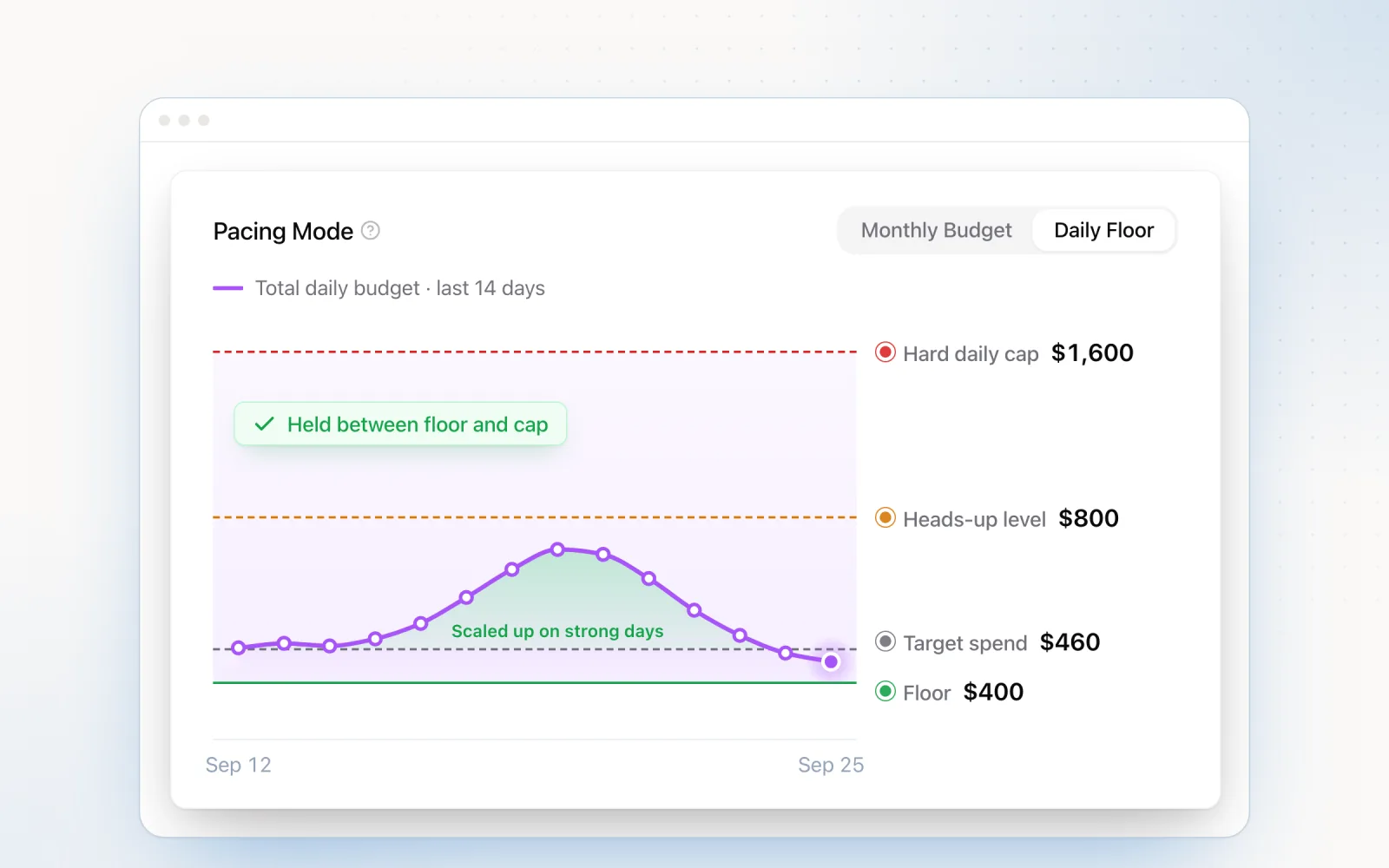
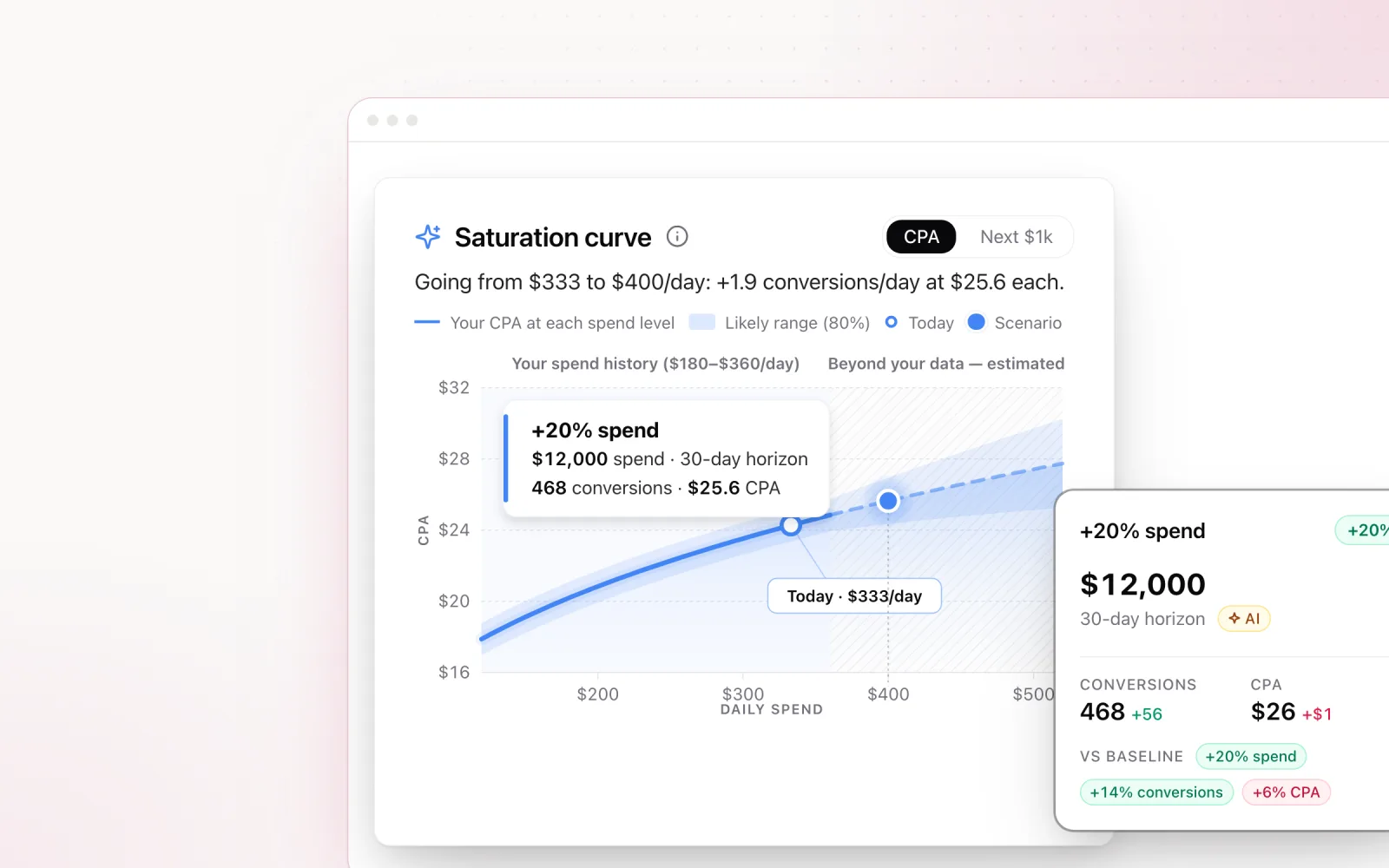
Predictive budget pacing. Rather than reacting to overspend after it happens, predictive models forecast where spend will land based on current trajectory and historical patterns. This allows the system to make smaller, earlier adjustments instead of large corrections at month-end.
Bid optimisation at scale. Google's own Smart Bidding is a legitimate application of machine learning. It processes auction-time signals (device, location, time, audience signals, query context) faster than any human bid strategy could. The model improves with data volume, which is why it works better on high-traffic campaigns.
What AI Cannot Do Yet
The limitations of AI in ad management are just as important as its strengths. Overselling AI capabilities leads to dangerous automation, where agencies trust systems to make decisions they are not equipped to make.
Creative strategy. No model can reliably determine what ad creative will resonate with a specific audience. AI can test variations and identify winners from a set of options, but it cannot generate the strategic insight behind why a particular message works for a particular market. Creative decisions require understanding brand positioning, competitive context, and cultural nuance.
Business context and client relationships. An AI system does not know that your client's CEO hates seeing the brand next to certain content. It does not know that Q4 budgets are inflated because the client needs to spend remaining annual allocation. These contextual factors drive critical decisions that no model can infer from performance data alone.
Cross-platform strategic allocation. While AI can optimise within a platform, the decision of how much to allocate to Google versus Meta versus LinkedIn requires understanding business goals, sales cycles, and attribution models. These are strategic decisions that depend on factors outside the ad platforms' data.
The Black Box Problem
Many AI-driven ad tools operate as black boxes. They make changes to your campaigns and tell you the result, but they do not explain the reasoning. For agencies that need to justify every decision to clients, this is a serious problem.
When a tool adjusts a bid or reallocates budget, the agency needs to answer a straightforward question from the client: why? "The AI decided" is not an acceptable answer. Clients want to understand the logic, review the data, and have confidence that changes align with their business objectives.
Explainable AI matters because it preserves the agency's ability to maintain transparent change logs and provide informed recommendations. A tool that makes opaque decisions undermines the trust relationship between agency and client, even when the decisions are correct.
The best AI tools provide audit trails. They show what changed, when it changed, what data triggered the change, and what the expected outcome was. This transparency turns AI from a liability ("we lost control") into an asset ("we have a system that explains every decision").
AI in Ad Management: Questions to Ask Any Vendor
When evaluating an AI-powered ad management tool, these questions separate genuine capability from marketing language:
- What specific model or technique does your AI use? A vendor that can explain whether they use regression models, gradient boosting, neural networks, or reinforcement learning is more credible than one that just says "proprietary AI."
- What data does the model train on? Does it learn from your account's historical data, aggregated data across all clients, or external benchmarks? Each approach has different implications for accuracy and privacy.
- What transparency do you provide? Can you see why the AI made a specific recommendation? Is there an audit log of every automated change?
- What override controls exist? Can you set guardrails, approve changes before they are applied, or exclude certain campaigns from automation? A tool that does not let you override its decisions is a tool you should not trust with client budgets.
- How does the model handle new accounts? AI models need data to learn. If a tool claims instant optimisation on a brand-new account with no history, the "AI" is likely a set of heuristics, not a trained model.
The Human + AI Workflow
The agencies getting the most value from AI treat it as a co-pilot, not an autopilot. They use AI for the tasks it handles well (data processing, pattern detection, pacing calculations) and keep humans in charge of the tasks it handles poorly (strategy, client communication, creative direction).
In practice, this means using AI to surface insights and recommendations while maintaining human approval for significant changes. A good AI tool should reduce the time you spend on spreadsheets and calculations. It should not reduce the time you spend thinking about strategy.
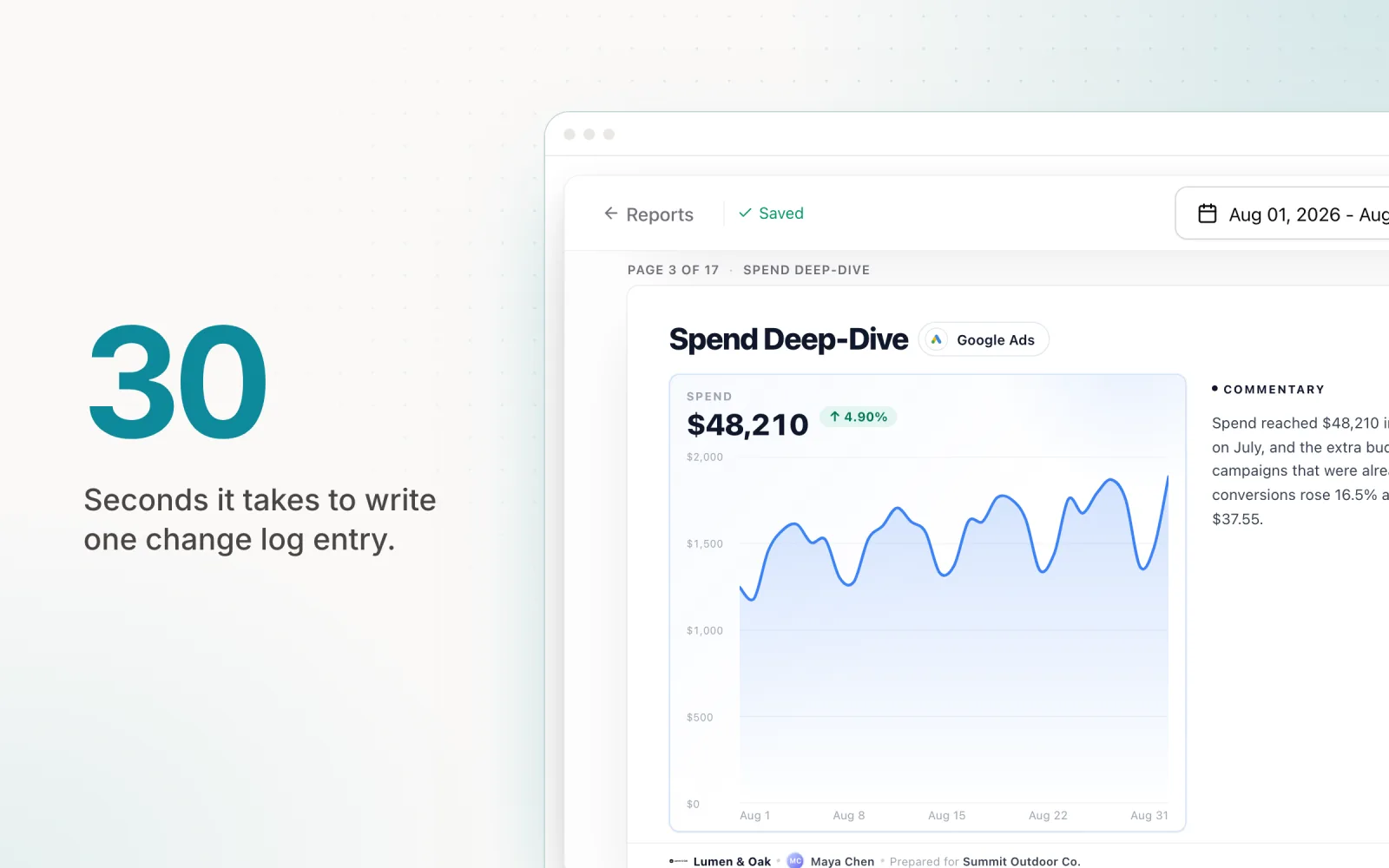
At Pace, we built our system around this philosophy. The AI handles predictive pacing, anomaly detection, and automated budget adjustments. But every change is logged, every recommendation includes the reasoning, and agencies get guardrails including hard day-over-day limits on budget changes, overspend protection that treats the monthly budget as the cap and checks spend every 5 minutes, and campaign-level inclusion/exclusion controls. The goal is to give media buyers better information and more time, not to replace their judgement.
If you are evaluating AI tools for your agency, start with the basics. Ask what the AI actually does. Ask for transparency. Ask for override controls. The vendors who can answer these questions clearly are the ones worth your time. Start a free Pace trial to see how we approach AI in ad management.

Jordan Parrello
Founder of Pace. Ran an agency pacing sheet by hand for years before building the thing that checks it every 5 minutes. About Pace or LinkedIn