There’s a ratio buried in every agency’s P&L that nobody writes down but everybody manages by feel: how many clients you can add before you have to hire. For most performance agencies it lands somewhere between six and eight. Win that many new accounts and someone on the team starts drowning, the job ad goes up, and margin takes a hit for the next two quarters while the new hire ramps. Revenue grows in a straight line. Payroll follows it up in stair-steps.
That ratio feels like a law of physics. It isn’t. It’s a function of where your team’s hours actually go — and most of those hours aren’t going where you think.
Where the hours actually go
Take one client. A daily pacing check across two or three platforms takes about 15 minutes when nothing is wrong. That’s already over an hour per client per week before anyone has optimized anything. Add the weekly status pull, a couple of hours a month assembling the report, and the inevitable “why did spend spike on Tuesday” investigation, and most agencies land somewhere around three to four hours per client per week on maintenance alone.
Across 20 clients, that’s 60 to 80 hours a week — more than one and a half full-time hires, spent on work no client would ever pay extra for. And it usually falls on your senior people, because they’re the only ones trusted not to miss an overspend. I’ve written before about what this does to a media buyer’s week past 20 clients; the short version is that the maintenance layer, not strategy, is what fills the calendar.
This is the real reason the six-to-eight-client ratio exists. Every new account adds another daily block of checking, adjusting, and pulling numbers. Nobody hires because they need more thinking. They hire because they’ve run out of checking capacity.
What a hire actually costs
So you hire. Here’s what that decision actually costs, and it’s worth writing the whole number down because most agencies only budget the salary line.
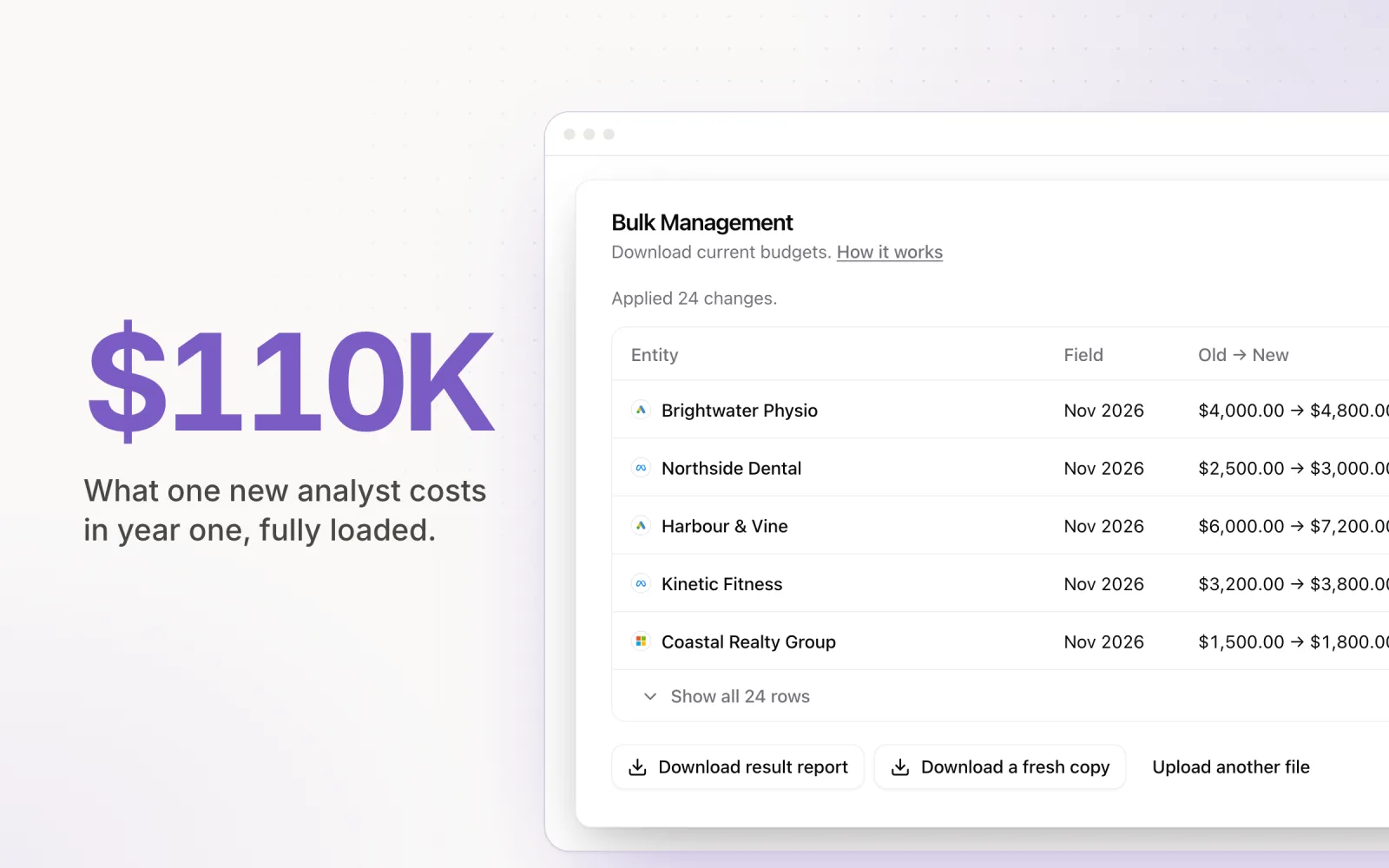
A mid-level media analyst or PPC account manager commonly runs around $85K in base salary in the US — job boards like Glassdoor and Indeed put the typical range at roughly $70–95K depending on market and experience. On top of that: payroll taxes and benefits at 20–25%, a recruiting fee or the internal hours your team spends screening and interviewing, and then the part nobody prices in — a search that typically takes about eight weeks, followed by roughly three months before the new person is safe to leave alone with a client’s budget. Year one lands north of $110K, and for close to five of those twelve months you were paying for capacity you didn’t yet have.
None of this is an argument against hiring. Agencies are people businesses, and great account managers are the product. It’s an argument for being ruthless about what those expensive, hard-to-find humans spend their hours on — because at $110K a year, a pacing check is the most expensive 15 minutes in your agency.
How many accounts can one account manager handle?
Ask around and the commonly cited manual ceiling is 8–12 PPC accounts per account manager, depending on spend, platform mix, and how demanding the reporting cadence is. What’s interesting is what sets the ceiling. It’s almost never strategic capacity — nobody maxes out at 10 accounts because they ran out of ideas. They max out because the daily maintenance block scales linearly with account count, and at 3–4 hours per client per week, ten clients is already a full-time job before any actual marketing happens.
Remove the maintenance layer and the arithmetic changes completely. The same account manager, doing the same strategic work, comfortably carries roughly twice the accounts — because the ceiling was never the thinking. It was the checking.
What automation actually absorbs
“Automation” is doing a lot of work in that last paragraph, so here’s the concrete version — what Pace specifically takes off the plate, across Google, Meta, LinkedIn, Microsoft, TikTok, Reddit, X Ads, and Amazon Ads:
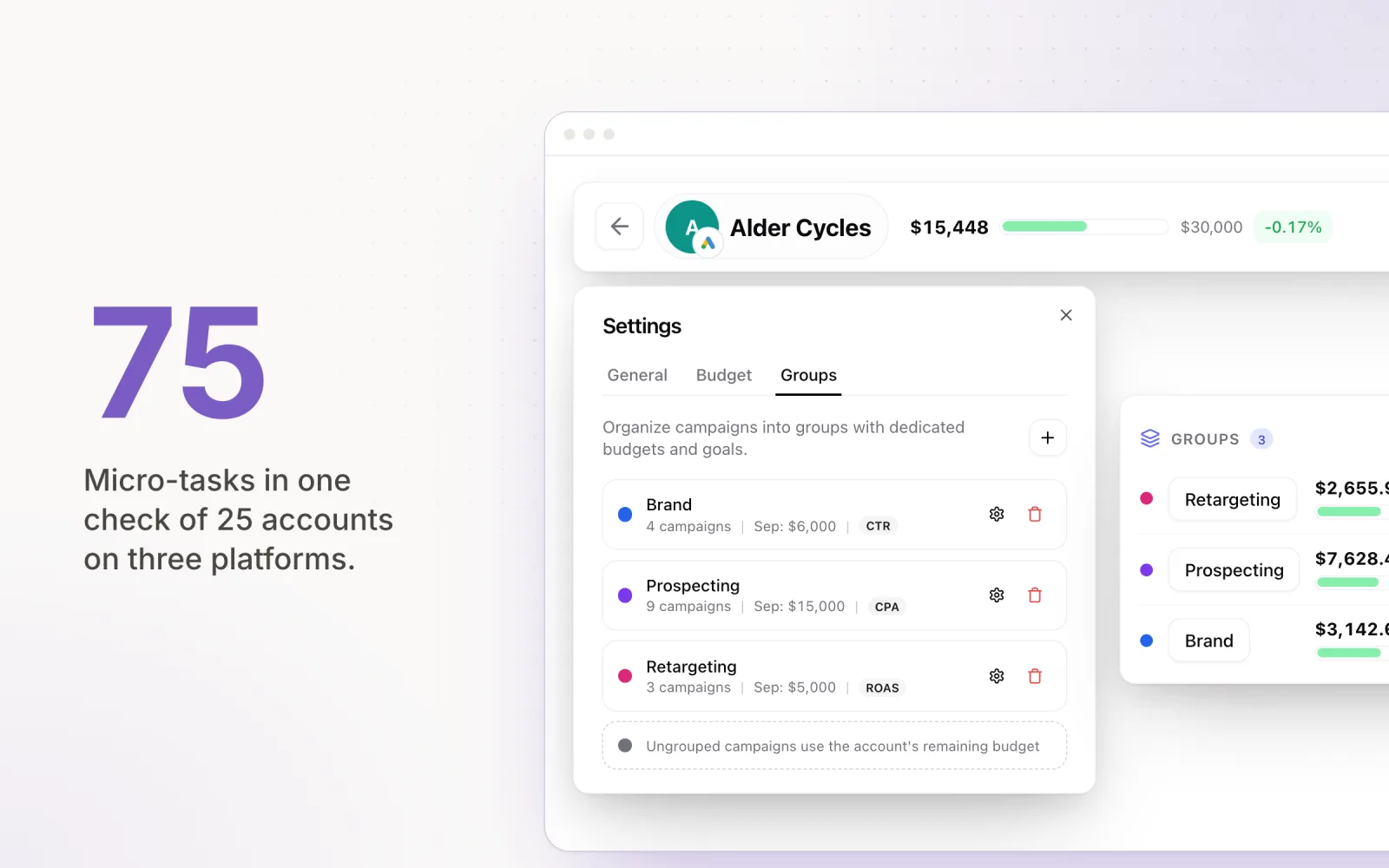
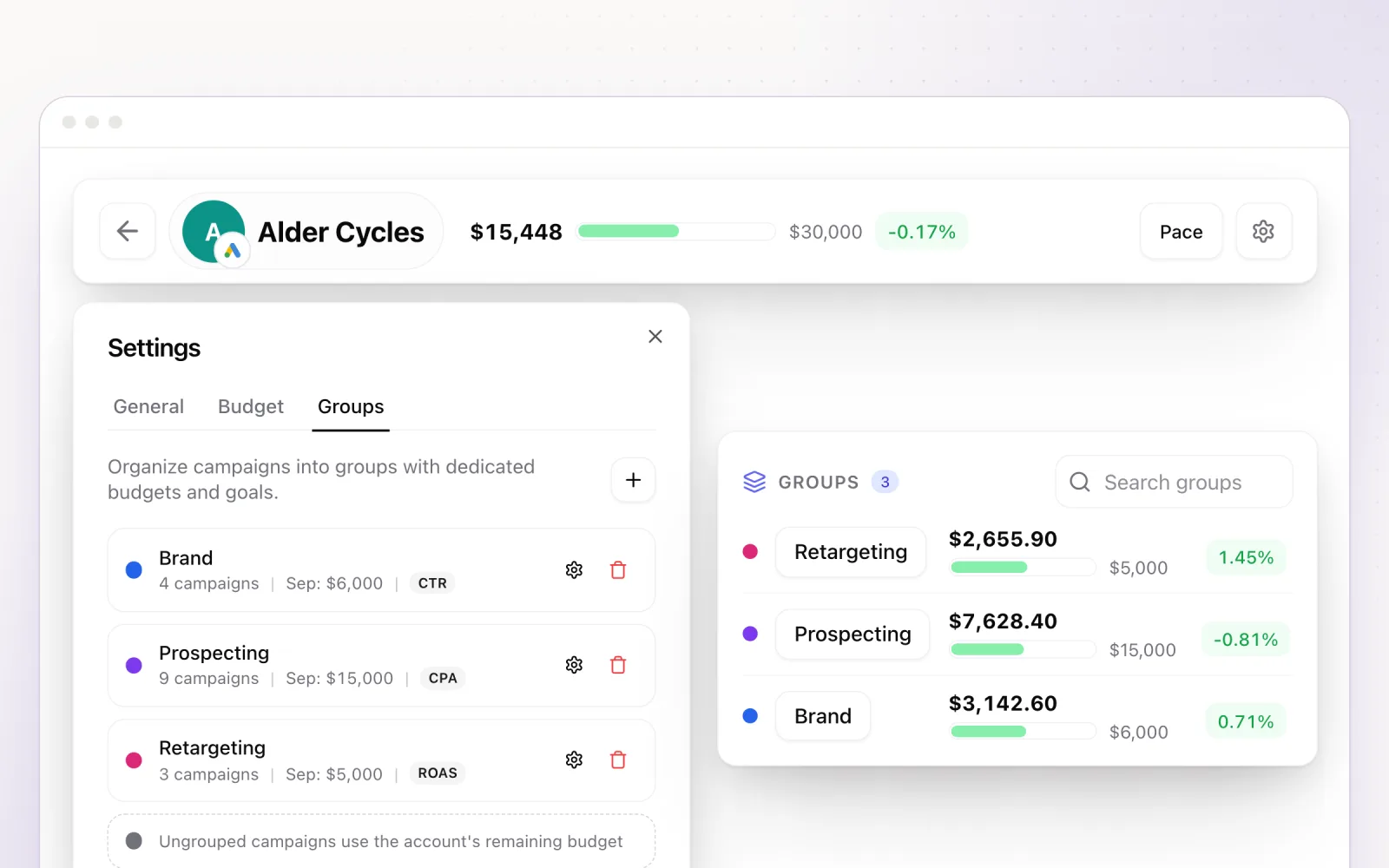
The daily pacing check. Pace adjusts daily budgets one to three times per day against each client’s monthly target, so “are we on track” stops being a question a human answers tab by tab every morning.
The overspend watch. Hard budget guardrails check spend every 5 minutes and pause campaigns automatically if a client’s cap is breached — the exact risk that keeps senior people doing junior checking.
The paper trail. Every budget change is logged with the reasoning, the data behind it, and the expected outcome. When a client asks “why did spend change on Tuesday,” the write-up already exists.
The anomaly hunt. Findings watch week-over-week performance and surfaces only genuinely significant issues — a creative fatiguing, a keyword eating budget with zero conversions — so the morning number-pull stops being a ritual and becomes an exception.
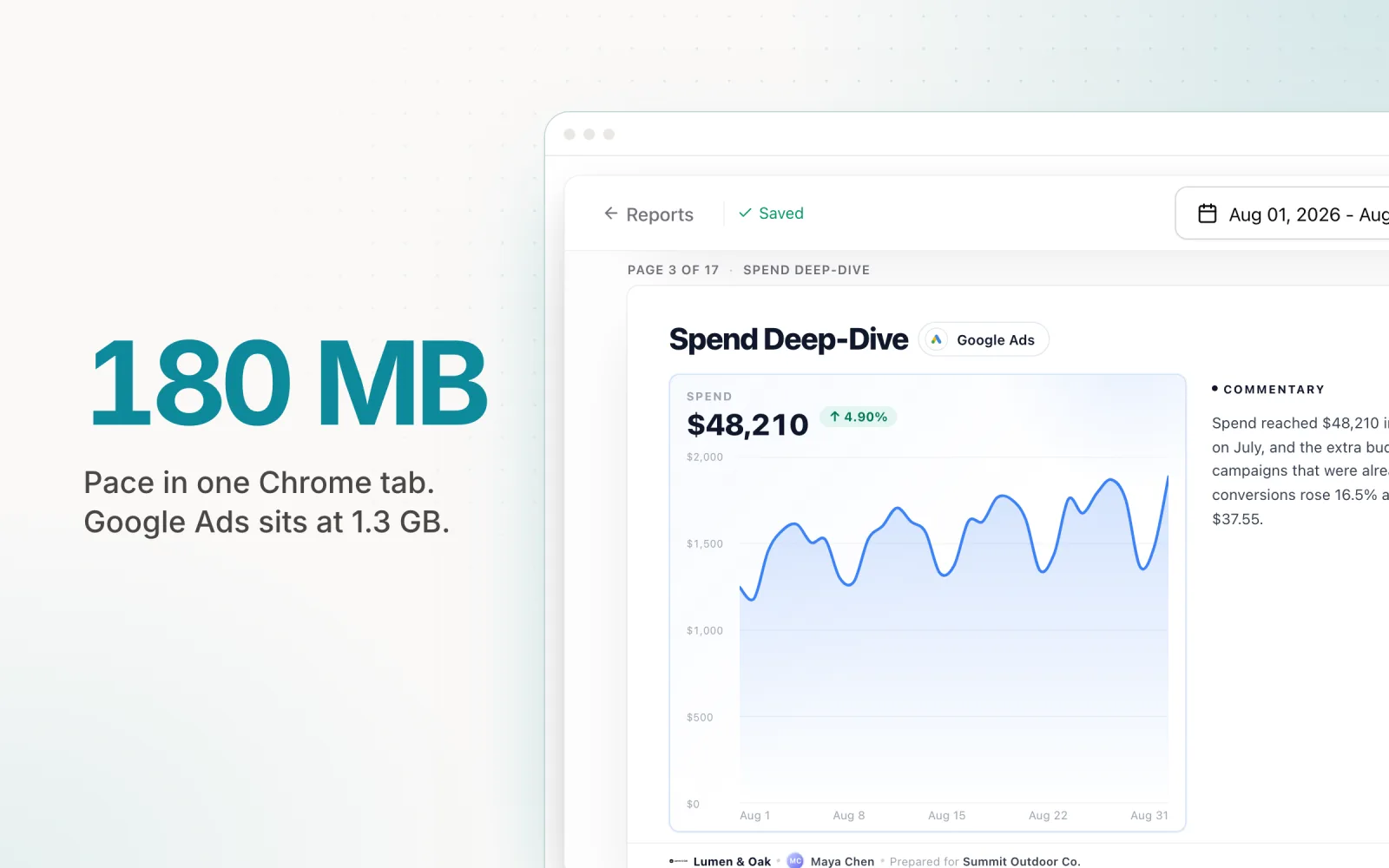
The report grind. Client reports assemble from live cross-platform data instead of a copy-paste afternoon at month-end.
That list maps almost one-to-one onto the 3–4 weekly hours per client from earlier. It’s the same work, done continuously by software, documented better than most humans document it.
What your team keeps
To be precise about what this is not: it’s not a smaller team. Strategy, creative judgement, testing roadmaps, the difficult conversation about why last month underperformed, the relationship that keeps a client through a rough quarter — that’s the job, and it stays human. What changes is that your people stop spending the majority of their week proving nothing is on fire, and your growth stops forcing a hiring decision every six to eight wins.
The agencies getting this right aren’t shrinking. They’re taking the same team further — and making their next hire for strategic reasons instead of maintenance ones. We’ve written up how this looks in practice on our agencies page.
The new math
Put the two options side by side. A new hire: an eight-week search, roughly $110K fully loaded in year one, 40 hours a week from one person, three months before full speed. Pace: connected via OAuth and pacing your accounts in about 15 minutes, $1,188 a year on the Pro plan, covering every account 24/7 — including weekends and month-end, the exact moments manual checking fails.
That’s not a case for never hiring again. It’s a case for breaking the ratio — growing your book on software capacity, and spending your next $110K on someone who does the work clients actually pay for. Start a 14-day free trial and see what your team’s week looks like without the maintenance layer in it.
Frequently asked questions
How many accounts can one account manager handle?
Managing everything manually, the commonly cited range is 8–12 PPC accounts per account manager, depending on spend, platform mix, and reporting cadence. The ceiling is almost always maintenance work — pacing checks, budget adjustments, and number-pulls that run 3–4 hours per client per week. With that layer automated, the same account manager can comfortably carry roughly twice the accounts.
Is automation a substitute for hiring account managers?
No — it changes when you hire and what the hire does. Automation absorbs the maintenance layer of ad management: daily pacing, overspend watching, change documentation, and report first drafts. Your team keeps strategy, creative judgement, and client relationships. The practical effect is that growth stops forcing a hire every 6–8 new clients, and the hires you do make go into work only humans can do.
What does hiring a media analyst actually cost?
A mid-level media analyst or PPC account manager commonly runs around $85K in base salary in the US. Add payroll costs and benefits at 20–25%, recruiting fees or internal hiring time, and a roughly three-month ramp to full productivity, and year one lands north of $110K — after a search that typically takes about eight weeks.

Jordan Parrello
Founder of Pace. Ran an agency pacing sheet by hand for years before building the thing that checks it every 5 minutes. About Pace or LinkedIn