If you are a performance marketer, you know the feeling. It's the 25th of the month. You open your "Master Pacing Tracker" spreadsheet, log into Google Ads, copy the spend. Log into Meta, copy the spend. You paste them into Excel, drag the formula down, and your stomach drops.
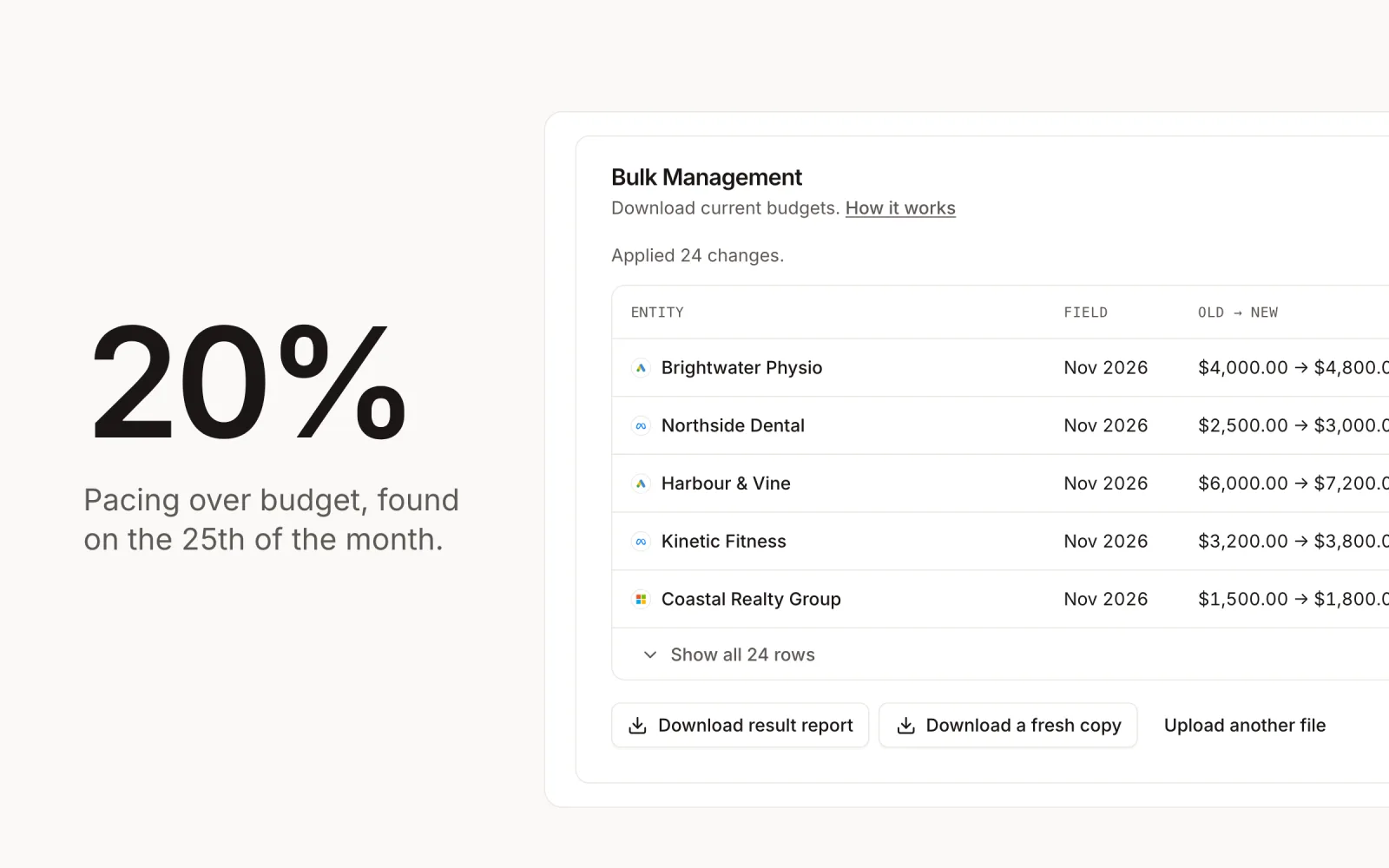
You are pacing 20% over budget. Or worse, you're 30% under, and you have five days to spend thousands of dollars efficiently.
Spreadsheets have been the backbone of digital marketing for decades, but in an era of automated bidding and real-time auctions, manual pacing is a liability. Here is why it's time to ditch the CSVs and switch to automated pacing with Pace.
The "Snapshot" Problem
The moment you export data to a spreadsheet, it is obsolete. Ad spend is fluid. A campaign that was quiet yesterday might explode today because of a trend or a competitor dropping out of the auction. Manual trackers give you a snapshot of the past, not a control panel for the present.
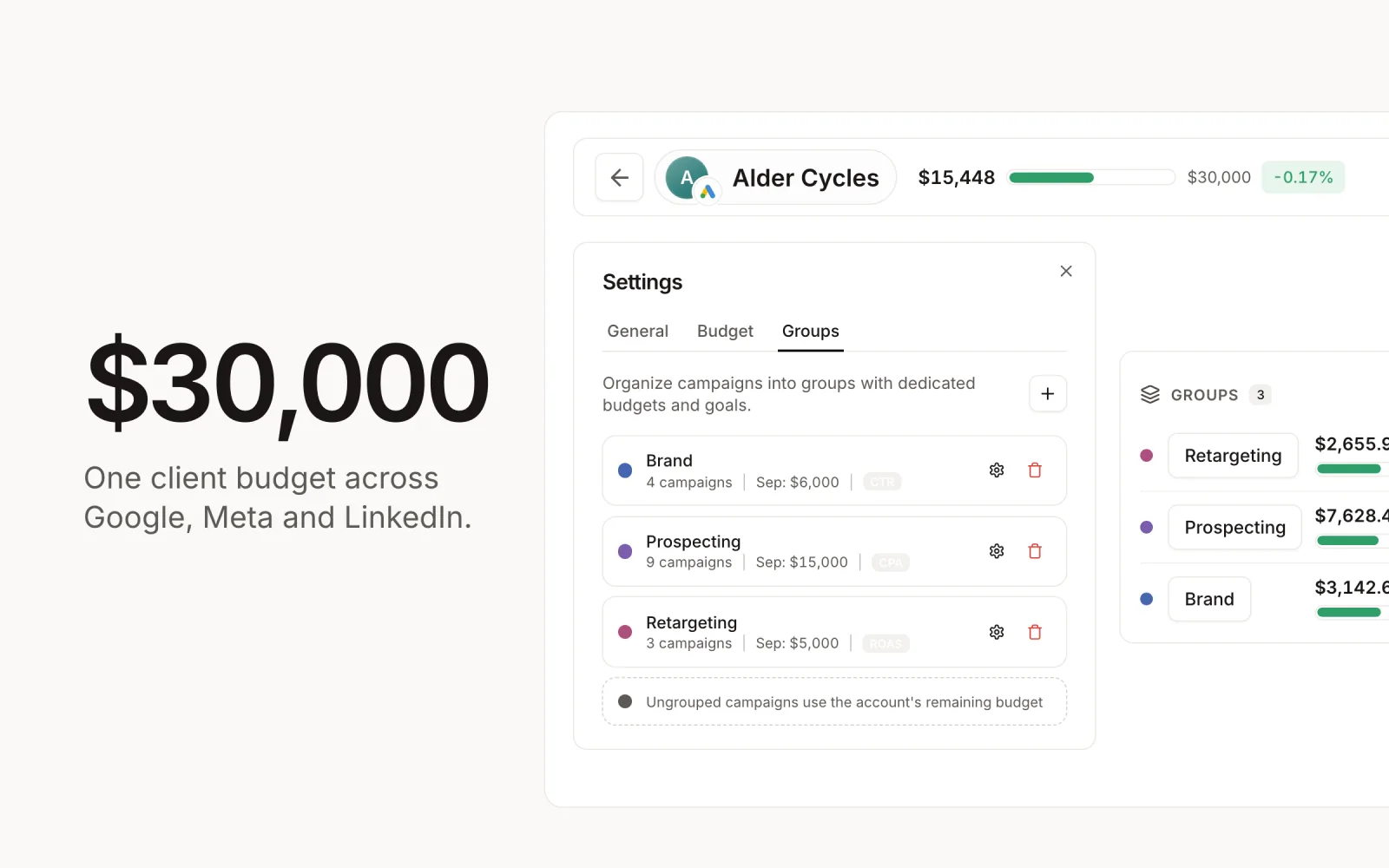
Pace solves this by connecting directly to your ad accounts via secure OAuth.
- Real-time data: We fetch data directly from Google, Meta, TikTok, LinkedIn, Microsoft, Reddit, X Ads, and Amazon Ads APIs.
- Zero data entry: No more copy-pasting errors that ruin your client reports.
The Opportunity Cost of "Checking In"
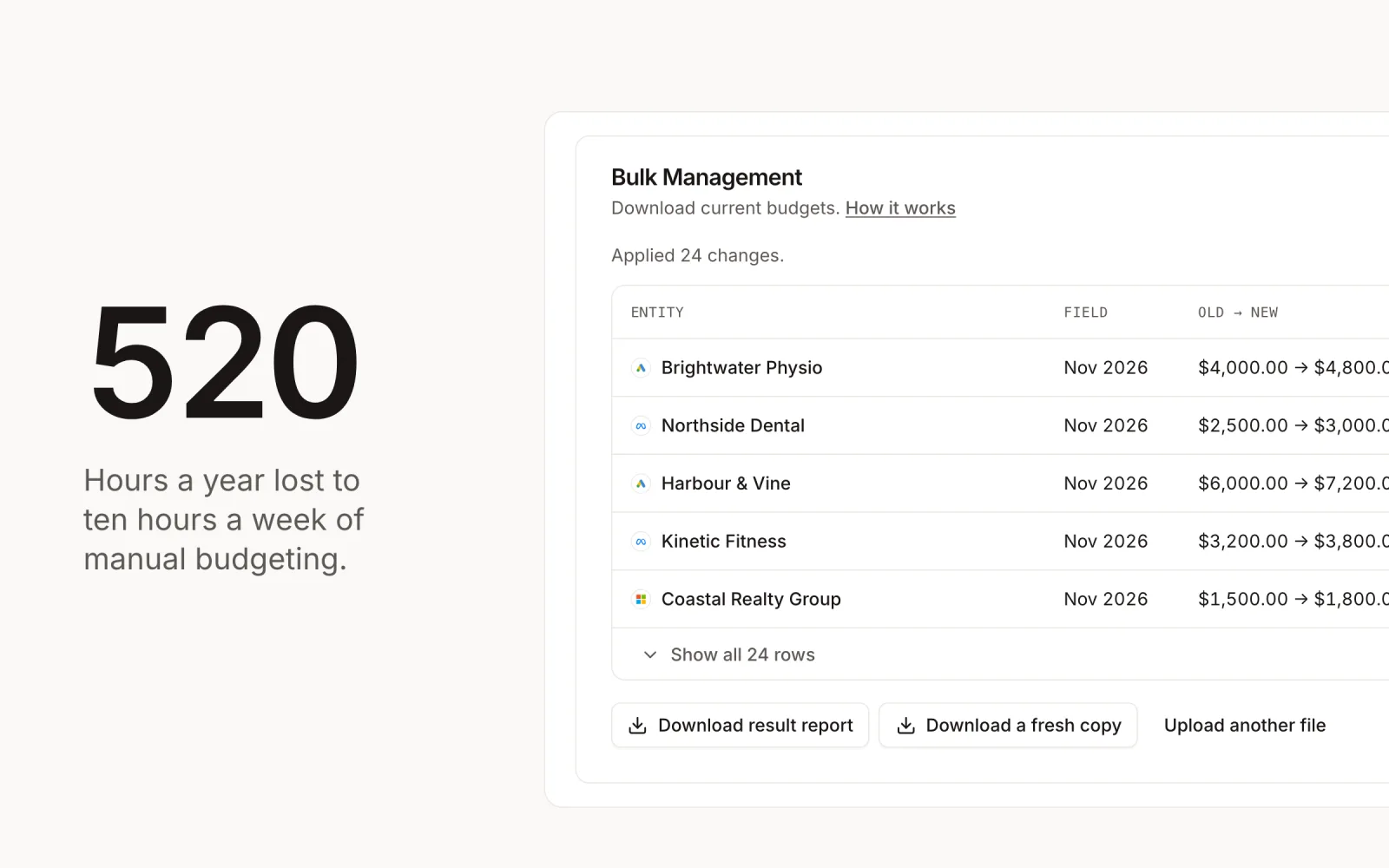
How many hours a week do you spend just logging in to check if a campaign is behaving? If you manage 10 accounts, that "quick check" adds up to hours of lost strategy time.
Run the numbers on your own book. Ten accounts at five minutes each, every working day, is 50 minutes a day. Over a 22-day month that's about 18 hours, before anyone has changed a budget.
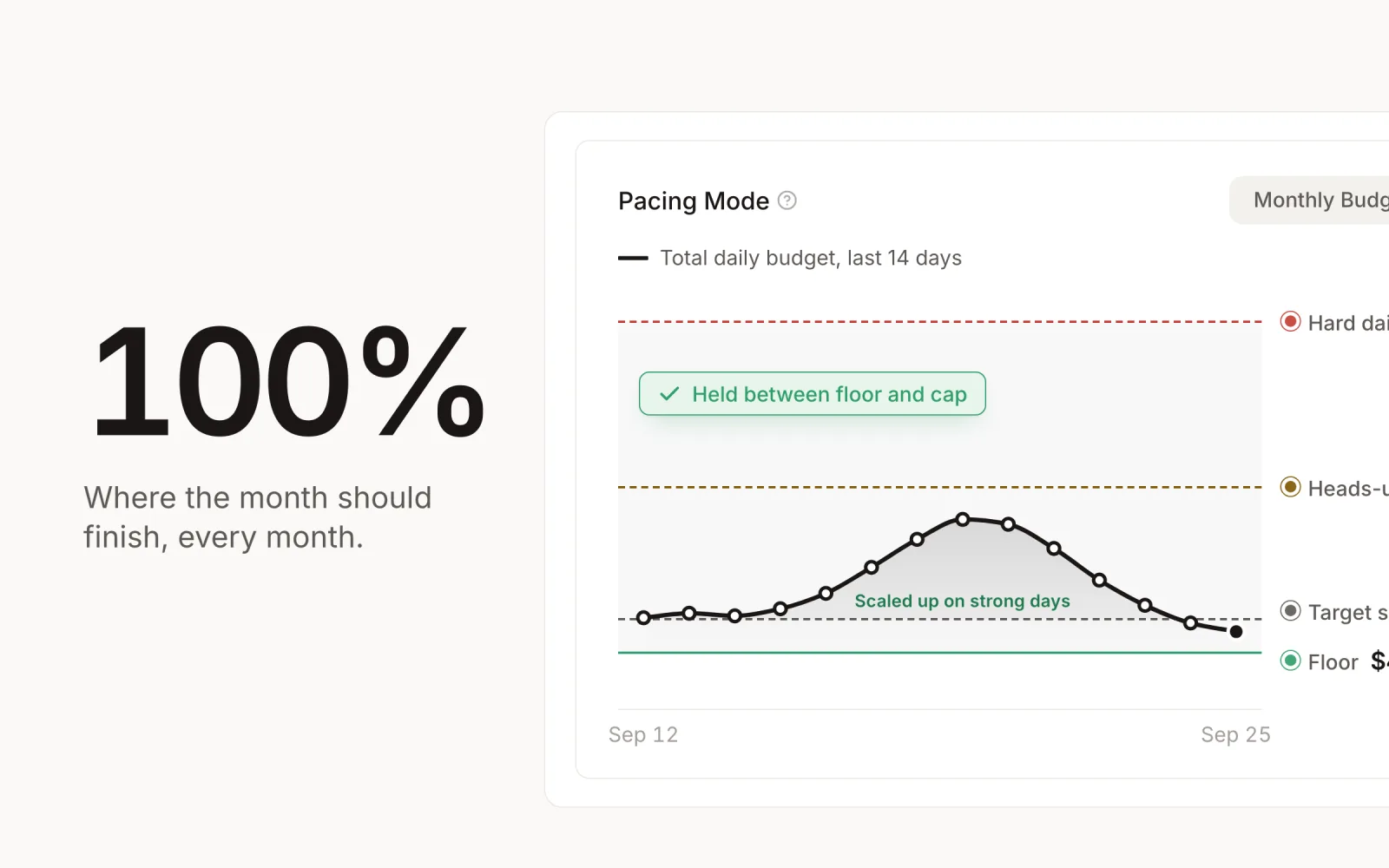
Pace acts as your 24/7 watchdog. Our Pacing Dashboard visualizes your spend against your targets instantly. We don't just show you the numbers; we calculate the trajectory. You can see at a glance which accounts are "hot" and which are "cold," allowing you to intervene only when necessary.
Where the spreadsheet breaks first
A tracker holds up until the account mix stops being simple.
- Flat daily targets. Budget divided by 30 treats every day alike, but Google can spend up to twice your average daily budget on a single day. The sheet flags a normal spike and misses the slow drift. The budget pacing formula fixes the maths, but someone still has to run it.
- Mid-month budget changes. The client adds $2,000 on the 15th. Somebody has to find the right cell, change it and remember the month's earlier spend still counts.
- Mixed currencies. AUD and USD accounts on one tab need a conversion column, and that rate goes stale the day you type it in.
- Different time zones. Each ad account closes its day in its own time zone, so "yesterday" isn't the same 24 hours across the sheet.
- One person owns it. When the person who understands the formulas is away, the morning check stops.
When a spreadsheet is still fine
One or two accounts on one platform with steady budgets don't need software. Use remaining budget divided by remaining days, or run it through the free pacing calculator, and format the pacing column to flag anything under 90% or over 110%. The sheet stops paying for itself once a missed check costs more than the time it saves, which usually arrives with several clients across several platforms.
The Solution: Automate the Math
Pace doesn't just track; it acts. We've built a system that can automatically calculate and apply budget adjustments. Instead of you manually doing the math on how much to lower daily caps to hit a $5,000 monthly target, Pace handles the calculation and updates the platform for you.
Ready to retire your spreadsheet? Sign up for Pace and start hitting your targets exactly, every single month.

Jordan Parrello
Founder of Pace. Ran an agency pacing sheet by hand for years before building the thing that checks it every 5 minutes. About Pace or LinkedIn